Market Place
Fitness Universe has now become a great source for all of your online fitness based product requirements:
Supplements
Fitness Universe has now become a great source for all of your online fitness based product requirements:
Supplements
Have you ever noticed that as you get older, it gets harder to stay in shape?
In my early 20s, it was easy to lose a few centimetres of body fat. Now 10 years later, it takes just a little more effort to keep those centimetres at bay.
When it comes to fat loss, we’re talking about metabolism. In other words, the amount of energy (kilojoules) our body needs to maintain normal day to day functions like breathing, digestion, circulation, temperature and tissue repair. Our metabolic rate is the speed at which our body burns these kilojoules. Some of us are born with fast and efficient metabolisms, whilst others have sluggish ones. The important thing to remember is that no matter which type you have, it can always be controlled by managing your lifestyle and what you eat.
speeding things up
If you want a faaster metabolic rte, you should always eat a good breakfast. Your metabolism is higher in the mornings and slower later on, so it makes good sense to spread your kilojoule intake throughout the day rather than eating one huge meal at night as so many of us do.
Believe it or not, eating four or five small, healthy meals a day will keep your metabolic rate up. But make sure you eat medium to low GI (glycemic index) foods.
Glycaemic index is simply a ranking of foods according to their immediate effect on blood sugar levels. Eating lower GI foods will keep your blood sugars stable and leave you feeling satisfied for longer. Lower GI foods to include are foods such as beans and pulses, fruits such as apples, pears, berries, oranges, kiwi fruit, peaches and figs and most vegetables, including mushrooms, green beans, capsicum, cauliflower, cabbage, broccoli and salads.
Other foods to include are low-fat and low-sugar plain yoghurt, pasta, noodles, bran and oats. And by drizzling a little citrus (lemon, lime, grapefruit) or vinegar on to your foods you can lower the GI by as much as 30 per cent.
Some studies claim that certain foods can raise your metabolic rate and promote fat burning. Capsicum, green tea, hot chillies and hot mustard are claimed to be great metabolism boosters, as well as flaxseed which is important for efficiency.
magic ingredients
The vitamin C in fruits and veg such as berries, citrus, kiwi, broccoli, cabbage, capsicum, melon, mango, red cherries and red grapes, also stimulate the production of an amino acid called carnitine that helps with fat metabolism. Calcium is also great for releasing hormones that break down fat; good sources include low-fat skim milk, cottage cheese, ricotta and yoghurt. Other sources include tinned salmon and sardines (include eating the soft bones), calcium fortified soy milks, juices, broccoli, bok choy, kidney beans, seeds and nuts.
What you must never do is starve yourself to lose weight. This will only slow your metabolism more and when you start to increase your food intake you’ll end up weighing more than you did at the start.
But remember, too, it’s not about watching the scales. It’s body fat we’re worried about not weight, as muscle weighs about four times more than fat.
Also be sure to keep hydrated with lots of water to keep your energy levels up and keep you from picking at food when you’re not hungry.
OK, now your food intake is sorted, it’s time to introduce that other great metabolism booster, exercise. It can boost your metabolism by 10 to 25 per cent up to 12 to 14 hours after a vigorous workout.
Exercising first thing in the morning before breakfast will result in a greater proportion of fat being used as fuel. This is partly due to our glycogen stores being partially depleted throughout the night. Exercise intensity is also important the fitter you become, as exercising at a higher intensity will deplete your glycogen stores at a faster rate and in turn encourage your body to use a higher percentage of fat. So forget the sleep in because this is the perfect time to put on your joggers and move. Weight training is also an important factor in increasing metabolic rate and one of the best ways to encourage your body to use more fat as fuel. Every kg of muscle burns 420 kilojoules per day compared to one kilogram of fat which burns only 17 kilojoules. So, now you have all the info, try these metabolism-boosting recipes.
Study: It pays to be fit in 20s
Participants who were out of shape had more health risks in 30s, 40s
People who are out of shape in their 20s run a high risk of developing high blood pressure, diabetes and other heart attack risk factors by their 30s and 40s, according to a study in which people were given treadmill tests of their fitness.
The lesson: “People can’t wait until middle age to try and protect themselves,” said lead author Mercedes Carnethon, an assistant professor of preventive medicine at Northwestern University.
The study involved about 4,400 men and women who were given a treadmill test when they were 18 to 30. Most of them were followed for 15 years after that.
Those who did not do well on the treadmill test faced double the risk of developing high blood pressure, diabetes or a condition called metabolic syndrome, compared with highly fit participants. Metabolic syndrome is a cluster of symptoms that includes high blood sugar, poor cholesterol levels, elevated blood pressure and a fat belly.
Some participants underwent a second treadmill test, seven years after the first. Those who became more fit during those intervening years reduced by 50 percent their risk of diabetes and metabolic syndrome.
The study is published in Wednesday’s Journal of the American Medical Association.
The findings “confirm what common sense has always told us: Lack of fitness in youth is not a good thing for later life,” said Dr. Teri Manolio, director of epidemiology at the National Heart, Lung and Blood Institute, which funded the research.
Fitness levels were determined by how long participants could walk on a treadmill without becoming fatigued and short of breath.
It’s a busy old world and time is of the essence. Here’s how to make every second count.
Spare minutes (let alone hours) are hard to come by in these helter skelter times. When they can be found, the majority of us want to put them to good use by doing such productive things as watching tv, chatting or simply staring at the ceiling relishing in our good fortune. But the fact is you can do all of the above and still have enough time to squeeze in an effective workout.
Don’t believe us? Then take it from the experts. Dean Piazza, personal trainer and head of www.getfit.com.au, says that if we choose the right moves and perform them in the correct way, we can achieve amazing things in short periods of time.
“Express workouts are a great way to increase your fitness level and drop a few kilograms along the way,” says Piazza. “Because they’re shorter you can push yourself harder. Sometimes that increase in intensity is the difference between excellent results or just maintaining your current fitness level and weight.”
Today many health clubs offer express classes for members who are pressed for time. There’s Spinning Express, Step Express and even Yoga Express. Express classes tend to be extremely popular, particularly with stressed out city workers. The reason?
They provide maximum results in minimum time.
“They’re time efficient so you won’t be running late for work or your next appointment,” says Piazza.
“It’s easier to stay focused and motivated for 30 minutes. It’s always the first half of a regular hour long workout that flies by, the second half can drag on.”
If classes aren’t your thing, you can adapt an express-style workout for the lounge room or the local park. As long as you keep up the pace you won’t shortchange your results.
This comes as good news to Melanie Symons, 28, from Channel Seven’s backyard makeover series Ground Force and Great Summer Ideas, a one-off special jam-packed with tips on how to enjoy summer. Shooting Ground Force takes a full two days a week, then there are the planning days and days spent sourcing materials. Symons also has to record voice-overs and attend press appearances and launches. Accordingly, there’s not much workout time left over.
“My schedule is chockablock,” she says. “It’s easy to think, `Oh, I can’t work out because I only have half an hour’.”
We explained that 30 minutes is plenty of time and Symons now plans to follow our Express plan from here on in.
And if Symons can find enough time to follow our super speedy fitness program, then so can you. Here’s how.
need for speed
To get the maximum amount out of this program, your best bet is to perform it at least three times a week. You should spend roughly three minutes on each move. Between moves you need to skip for three minutes. There are five moves so, all up, this workout will take about half an hour. If 30 minutes is too much for you, then cut the skipping sessions back to one minute only.
If you’re already pretty fit, you can increase weights or repetitions and give yourself that extra push. The ultra-fit can increase the skipping sessions. Finally, for those who aren’t coordinated enough for skipping, such as myself, try power walking, jogging or cycling. Whatever floats your boat.
bicep curls
Stand with feet slightly wider than shoulder-width apart, knees slightly bent. Hold a dumb-bell in your hand. Slowly curl your hand up towards your shoulder and then slowly lower towards your hip. Each move should be performed to a count of two. Use a weight that is heavy enough for you to perform two sets of 15, but not a single repetition more.
push-ups
Lie face down with hands slightly wider than shoulder-width apart. Raise your lower body onto your toes and then, using your upper body, push up. Slowly lower your upper body towards the floor, keeping your body in a straight line and repeat. Aim for as many as you can within a three minute period. Not strong enough? Try modified push-ups (from your knees rather than your toes) instead.
the bicycle
Lie on your back, bend and raise knees so they’re in line with hips. Keeping your left leg in position, extend your right leg. As you do so, bring your right elbow towards your left knee. Then, pull your right knee back in towards you and repeat on the other side. Keep elbows wide and hands at the sides of your head
squats
Stand with feet shoulder-width apart, knees slightly bent. Sit down as though into a seat, ensuring knees don’t shoot over toes. Lower as far as you can without allowing your upper body to lean more than 10cm forward, then push back to a standing position.
lunges
Stand with feet slightly wider than hip-width apart, hands on hips. Square shoulders and then step forward with your right leg. Let your left knee drop towards the floor until your shin is parallel to the ground. Push back to starting position and repeat. To increase intensity, hold dumb-bells in your hands or a weighted bar-bell across your shoulders.
no pain, major gain
Ground Force star Melanie Symons has been following the same workout for close to six years! This is very naughty because her body would have adjusted to it long ago, meaning her workout is no longer as effective as it should be. You need to shock your body by chopping and changing your workouts.
Most exercise physiologists agree you need to change your workout program at least every six weeks. Challenge yourself with new exercises or entirely new workouts such as salsa dancing, Yogalates or tai chi.
You never know – you might stumble across a new passion.
For every express workout you sweat through, you’ll need to do two longer workouts of about 45 to 60 minutes. But don’t panic – you won’t be working at the same intensity. If the express workout calls on you to work at a Rate of Perceived Exertion of about eight or nine out of 10, your longer workouts should be performed at an RPE of about six out of 10.
Most people’s primary motivation for weight management is to improve their appearance. Equally important, however, are the many other benefits of proper nutrition and regular exercise.
Weight management through reduction of excess body fat plays a vital role in maintaining good health and fighting disease. In fact, medical evidence shows that obesity poses a major threat to health and longevity. (The most common definition of obesity is more than 25 percent body fat for men and more than 32 percent for women.) An estimated one in three Americans has some excess body fat; an estimated 20 percent are obese.
Excess body fat is linked to major physical threats like heart disease, cancer, and diabetes. (Three out of four Americans die of either heart disease or cancer each year; according to the National Health and Nutrition Examination survey, approximately 80 percent of those deaths are associated with life-style factors, including inactivity.)
For example, if you’re obese, it takes more energy for you to breathe because your heart has to work harder to pump blood to the lungs and to the excess fat throughout the body. This increased work load can cause your heart to become enlarged and can result in high blood pressure and life-threatening erratic heartbeats.
Obese people also tend to have high cholesterol levels, making them more prone to arteriosclerosis, a narrowing of the arteries by deposits of plaque. This becomes life-threatening when blood vessels become so narrow or blocked that vital organs like the brain, heart or kidneys are deprived of blood. Additionally, the narrowing of the blood vessels forces the heart to pump harder, and blood pressure rises. High blood pressure itself poses several health risks, including heart attack, kidney failure, and stroke. About 25 percent of all heart and blood vessel problems are associated with obesity.
Clinical studies have found a relationship between excess body fat and the incidence of cancer. By itself, body fat is thought to be a storage place for carcinogens (cancer-causing chemicals) in both men and women. In women, excess body fat has been linked to a higher rate of breast and uterine cancer; in men, the threat comes from colon and prostate cancer.
There is also a delicate balance between blood sugar, body fat, and the hormone insulin. Excess blood sugar is stored in the liver and other vital organs; when the organs are “full,” the excess blood sugar is converted to fat. As fat cells themselves become full, they tend to take in less blood sugar. In some obese people, the pancreas produces more and more insulin, which the body can’t use, to regulate blood sugar levels, and the whole system becomes overwhelmed. This poor regulation of blood sugar and insulin results in diabetes, a disease with long-term consequences, including heart disease, kidney failure, blindness, amputation, and death. Excess body fat is also linked to gall bladder disease, gastro-intestinal disease, sexual dysfunction, osteoarthritiis, and stroke.
The average American does a little too much celebrating at this time of year. Between Thanksgiving and the New Year, most of us will gain seven pounds as a result of indulging in extra helpings, snacking on holiday treats, having an extra glass of wine and exercising less.
Life Time Fitness, Inc., a Healthy Way of Life company that operates 30 multi-purpose, state-of-the-art Sports, Fitness and Recreational Centers in eight national markets — Minnesota, Illinois, Michigan, Ohio, Indiana, Virginia, Arizona, and Texas — has set the industry standard in providing consumers with the absolute finest in sports and fitness centers
“This is an especially challenging time of year for those who are trying to maintain healthy habits such as working out and eating low-fat, low-calorie foods,” says Jeff Zwiefel, vice president of the nutritional products division at Life Time Fitness. “We’re constantly urged to have another helping, enjoy a holiday treat or skip the workout to go shopping instead. No wonder nearly everyone gains weight,” he points out.
But complete deprivation is not the answer. “The holidays are meant to be enjoyed,” Zwiefel says. “At Life Time Fitness, we think it’s possible to balance healthy habits with enjoying special gatherings and traditions. We encourage balance and moderation in all areas of your life,” he says.<
Here are 10 great tips, courtesy of Zwiefel, for staying fit and eating well over the holidays.
For more information about Life Time Fitness centers and nutritional products, please visit www.lifetimefitness.com.
Courtesy of ARA Content
The very thought of going from zero fitness and marshmallow softness to full stamina, firmness and energy can seem overwhelming – enough to make you want to lie down. But even against the odds and the tide of excuses and a history of couch-potatoness, you can start. And you can continue.…into a regular routine of exercise. If you’re at this point in your life, you’re the right candidate for transformation. This plan just may be your best bet.
Change is an all-or-nothing proposition. You either do it, or you don’t. You can’t just exercise for 3 times one week, once the next week, take a couple of weeks off, go twice a week, and so on and expect to reap all the benefits.Only a handful of people can get into a regular exercise routine by suddenly beginning to exercise. Something just clicks inside and they workout with energy, and they enjoy it. But for the other 95%, getting into a regular routine with exercise is not so easy.
For these people, beginning an exercise program comes in stages, step by step, many of which happen before you even slip on your workout shoes or enter the gym. The very fact that you’re reading this article means that you’re already in one of the important first stages. And continuing to exercise regularly is also a process of change, a cycle of smooth sailing and bumpy seas.
Fortunately, there are techniques that you can use to help you move to the next level. Just be aware that the stage you are in changes all the time. Of course, once you know where you are, it’s easy to see what’s next. Here’s how to get there….
Back when we were kids riding a bike was all about having fun or simply getting from A to B. But we grew up, as kids do, and we discovered cars were a more effective form of transport. Not surprisingly our trusty two-wheelers were left to rust away. But perhaps that was a mistake. Even adults need a little fun every now and again and cycling still involves plenty of it. If that’s not enough to tempt you back on to the saddle, then think about this. Biking will help you build the body of your dreams and in no time at all. “Biking is a full body workout,” says Michael Kamahl, owner of Woolys Wheels in Paddington, Sydney. “It burns lots of kilojoules, tones all of your muscles and there’s no impact so it’s easy on your joints. It’s great for your butt, thighs and calves and, if you include some hills, you’ll also get an upper body workout, and it’s fun.” Before you hit the road, there are a few things you’ll need. Number one – a bike. Today’s shiny machines come in a range of prices. However, you’d be hard-pressed to find a quality, brand new bike for under $500 and many cost more than $2000.
On Your Bike
If you’re new to the sport, your best bet is a bike in the lower price range. There’s no point going the whole hog at this stage. That said, don’t skimp on quality. Do that and you risk injuring yourself or having to replace the bike at a later stage, both of which will cost more in the long run. So, what’s the difference between a $500 bike and the $2000 version? According to Suzanne Schlosberg and Liz Neporent, authors of Fitness For Dummies (Wiley Books), generally the more expensive the bike, the stronger and lighter its frame. “A heavy bike can slow you down, but unless you plan to enter the Tour de France, don’t get hung up on a matter of grams,” they say. “As you climb the price ladder, you find materials such as aluminium, carbon fibre and titanium. The price of the bike also depends on the quality of the components.”
Before you buy your bike, have a chat to staff members at reputable cycle stores. Explain what you want to use your bike for (long distance rides, commuting to work) and they will be able to tell you which bike you’re best suited to. If you buy from them they will also ensure your bike is adjusted to fit you. This will make a massive difference in terms of enjoyment and comfort. “There are now more sizes than ever,” says Kamahl, “and you need to have the right size for you. A bike specialist will help you select the right size and also the right style. You might want a racing bike, but if you’re just riding for fitness, perhaps you’d be better suited to a bike that’s built for comfort.” Before you hit the road you’ll also need a helmet. If you plan to ride for lengthy periods of time, consider gloves to protect your hands and padded cycling shorts to protect your butt. A water bottle that can be clipped to your bike’s frame will come in handy, as will a spare tyre kit – just make sure you learn how to use it.
Once you’ve got all the necessary gear you’re ready to get out there. But to get the most from your workout there are still one or two things you need to think about. If you want maximum benefit from your cycle, pedal at an easy cadence (the number of revolutions you peddle). An easy cadence means you should be able to spin the pedals without too much trouble. If you use too much tension you’ll be forced to turn the pedals in slow motion. Do this and you risk knee damage (not to mention aching thighs) and you’re likely to tire prematurely and miss out on a good workout. “The more revolutions the better,” says Kamahl. “This will increase your aerobic fitness and it will ensure you don’t get big thighs. On today’s bikes, the gears are numbered. All you have to remember is that the lower the numbers, the easier it is.”
One of the greatest things about cycling is that even beginners can (and will) quickly build up to 25 kilometre rides. Do this a few times a week (three is optimal) and your fitness levels will soar. Not only that, but your fat levels will drop dramatically and long, lean muscles will begin to appear. Remember to begin with a distance you’re comfortable with. Not sure what level you’re at? Try the talk test. While cycling you should be able to talk at all times. If you can’t spit out a couple of words, you’re pushing yourself too hard. If you can belt out the latest Delta Goodrem hit you need to crank up the pace. Each week increase your distance by no more than 10 per cent. This will help you avoid injuries and also physical (and mental) burnout. Once your fitness increases you can add interval training to your workout program. This means pushing hard and then easing up to allow recovery. Try cycling hard for four minutes and then taking it easy for two. Repeat five times for a 30 minute workout. Do this at least once a week and you’ll see dramatic changes in fitness, strength and body shape.
basic program A long-distance ride (begin with 45 minutes) three times a week. Once your fitness has increased, add one 30 minute interval training session.
If you’d like all the benefit of cycling, but are not the outdoor type, consider spinning. This group class taught on stationary bikes is available at most major gyms, and involves pedalling a stationary bike while an instructor talks you through a workout. During the class you vary pace and intensity. Most classes run for 45 minutes to an hour. That may not sound like long, but be warned – they can be exhausting. Having said that, it is also great fun and it burns fat like nothing else. It also strengthens the butt, thigh and calf muscles and builds great abs.
basic program Try a class first. If you like it, build up to two or three classes a week.
The after 50 set back that occurs in many people is due to improper diet. Once you past the age of 50, you must begin to rebuild your body — if you wish to avoid senility and retain sound mentality and physical vigor. As long as you supply the body with the materials it needs to rebuilt and repair cells you will have good health.
Re-examine your dietary habits — make sure your daily intake of food is nutritional. Slowly eliminate processed food (which is white flour and their products, french fries, cake, cookies etc.) and sugar from your eating habits. Now, you might say what’s left? There are many natural foods that are super in nutritional value and will do wonders for your muscle size and overall shape. It’s time you began to build a knowledge and understanding for good nutrition while you build your body. Be aware of the vitamins, minerals in food and what fantastic things these foods can do for you and your body.
Protein is the bodybuilding substance needed to form new tissues and cells and rebuild and repair old one. Your blood, tissues, organs, skin, hair, and nails are about 95% protein, along with your bones and nerves. Meat, fish, eggs and poultry are known as complete proteins. Others include soybeans, sunflower seeds, and peanuts. 60% of protein consumed is changed into sugar (glucose), that’s why sugar is completely unnecessary in your bodybuilding diet.
2/3 of your diet should be protein — the other third should be made up of fresh raw fruit, vegetables, nuts and seeds. Liver is the most effective source of complete protein. It’s the number on food that not only builds your body up, but greatly increases your energy. It relieves fatigue and neutralizes many dangerous drugs within your system.
Fat produces an energy reserve, slows down the rate at which food is digested and is a source of heat and energy, and a cushion for vital organs. Fish is practically a perfect food. It’s excellent source of high quality protein, vitamins and minerals. Eggs, are another superior protein food, 1-2 a day are recommended for everyone. They supply a full measure of minerals. True, they do contain cholesterol, but they are an excellent source of lecithin, inositol and many other effective cholesterol controlling agents. Powdered milk is outstanding because it consist of an abundance of fat free protein, vitamins and minerals. It’s known to rejuvenate the heart, brain, and verves and strengthens the failing body.
Natural carbohydrates invigorates the body and supplies is with warmth and vitality. The potato is not to be eliminated from your bodybuilding diet. It’s a vegetable and contains many nutritional elements and it’s very easily digestible. Honey is in the blood stream 20 minutes after eaten. It’s the best heart stimulant you can use. Honey has much greater advantage over sugar. It fills any void that may occur in the daily intake.
Here are the 4 fine qualities of honey:
a wholesome food
it’s a purifying cleanser
it has regenerative power
it’s a sweet that has natural laxative qualities
REMEMBER: It is not how much you eat — it’s what happens to the food after you have eaten it. Eating large quantities of food will not help your muscle building progress it it’s the wrong food!!
by J. R. McNeal, M. S., C.S.C.S. and W.A. Sands, Ph.D.
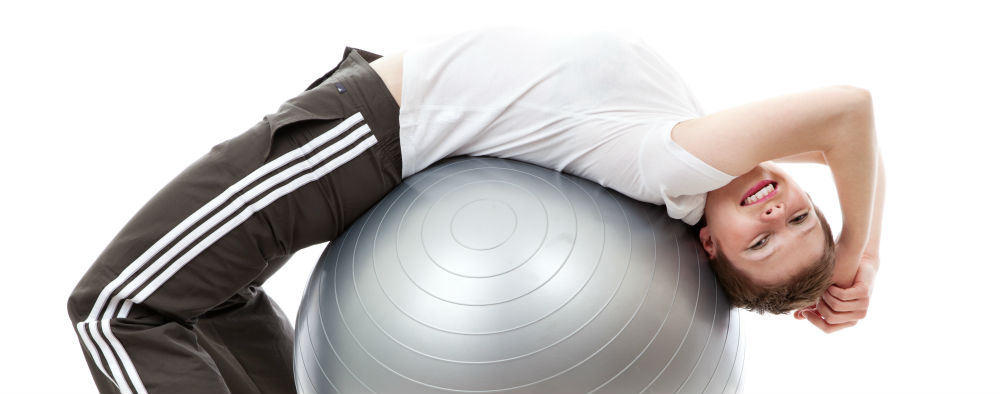
The fitness industry is replete with exercise devices designed to enhance fitness or sculpt the body. They are marketed to the unsuspecting and often gullible consumer, promising quick fixes and effortless results. Oh, if only it was that easy! Considering the amount of money Americans spend on fitness gadgets, we should be the fittest nation in the world instead of the fattest! One of the most recent trends in the industry is the emergence of the various abdominal conditioning devices, designed to “isolate” the abdominals (as if that were possible!), reduce neck strain, and in general make exercising the abdominal muscles an enjoyable experience. Are all of these devices created equal? How do they compare to a regular crunch, or the “forbidden” situp? The purpose of our investigation was to answer these questions. We decided to compare 6 different commonly performed exercises and devices to see if indeed there are differences in muscle activation and range of motion. By comparing the amount of muscle activation achieved, we can make recommendations regarding the relative value of one exercise over another with respect to force generated by the target muscles (the abs). Range of motion meanwhile, is a variable that has been virtually ignored in the fitness research literature. Watch virtually any throwing activity for example, and you can see that the range of motion of the trunk during such movements is large indeed.
We asked 20 active, college-aged students to participate in this investigation (10 females, 10 males). The exercises selected were 1) a regular crunch from the floor, 2) a regular situp with feet constrained, 3) a situp with the addition of the AbMat™ pad, 4) a crunch performed with an ab-roller type device, according to the recommendations of the manufacturer, 5) a crunch performed with the ab-roller combined with the AbMat™ pad, and finally 6) trunk flexion utilizing the Ab Bench resistive device. The exercises were demonstrated to the subjects, and they were allowed to practice each until they were comfortable with their performance. They were then videotaped with high-speed video while performing 3 trials of each exercise. Various anatomical structures of the subject were marked with reflective tape so that they were evident on the screen. This allowed the videotaped performances to be digitized and analyzed for specific kinematic information; in this case, angular displacement. Electromyography electrodes were placed on the upper and lower abdominals to assess muscle activity.
Findings:
For the lower trunk angle, the AbMat™ and Ab Bench achieved significantly greater ranges of motion than did the ab-roller exercises, the situp, or the regular crunch, although the traditional situp was significantly better than the ab-roller exercises and the regular crunch. At the hip and upper trunk angles it was again discovered that the AbMat™, Ab Bench, and the traditional situp were better than the ab-roller devices or the regular crunch at moving through a large range of motion. In most cases, the ab-roller exercises and the regular crunch did not differ from eachother, making the purchase of an ab-roller for specifically conditioning the abdominals questionable when compared to the regular crunch, which doesn’t cost anything! However, if the goal is exceptional conditioning of the abdominals through a large (“functional”) range of movement, then devices such as the AbMat™ and Ab Bench, which place the abdominal muscles in a slightly stretched position prior to each repetition, may be a wise equipment investment.
The muscle electrical activity provided even more insight into the efficacy of these particular exercises. It was of particular interest to us that the recordings from the abdominals could be described by different characteristic recordings; the regular crunch, ab-roller exercises, and the AbMat™ were characterized by a continuous activation pattern with a low amplitude (low force output), while the Ab Bench and situp were described by two distinct phases, concentric and eccentric which were of much higher amplitude. We did not feel we could adequately compare the two groups of exercises against each other due to these differences and thus the results basically compare exercises within each group. This is one example of the problems that can influence the results of electromyography studies of the abdominals, and any study not accounting for these differences should be considered with some reservation. Another problem which is inherent in electromyography investigations of the abdominals (but rarely if ever acknowledged by researchers in their results!) is the problem of skin and fat rolling that occurs whenever the trunk flexes. This makes the nature of the muscle electrical activity change as the electrode moves farther from and closer to the muscle. We feel that it is important to be aware of such shortcomings in this type of research so that you can become a more knowledgeable consumer.
The continuous activation exercises were not different in their activation of the upper abdominals. However, for the lower abdominals the AbMat™ elicited significantly more activity than did the ab-roller exercises. The regular crunch was superior only to the ab-roller exercise used simultaneously with the AbMat™. Therefore, the AbMat™ seems to be the superior exercise of this group for eliciting muscle activation, especially when the lower abdominals are considered.
The situp and Ab Bench exercises as stated earlier, were different in their EMG patterns. Because the EMG was greater in these exercises, but occurred over a shorter time period, these exercises may be better choices if large force production is desired, rather than muscular endurance. For both the upper and lower abdominals the situp produced greater activation than the Ab Bench. It is critical to note, however, that due to the limitations of this study and these typical subjects, we were not able to approach any kind of maximal load on the Ab Bench. The Ab Bench allows resistance to be added to the exercise, which would cause an increase in muscle activation to move the increased load. In other words, one should be able to get any level of activation up to a maximum with the Ab Bench. The situp is constrained by the weight of the individual’s upper body. This was likely a major drawback in the ability of this study to properly distinguish between these two exercises. Common sense would tell us that if we were able to increase the resistance provided by the Ab Bench, the muscle activation results would have been different.
In conclusion, it can be recommended that ab-roller devices may not be any better than the regular crunch in conditioning the abdominals. For specificity of movement, equipment such as the AbMat™ and Ab Bench which place the spine in a slightly hyperextended position prior to abdominal contraction may be better choices, especially for sport performance. The situp appears to also be a good choice for both range of motion and activation, although it is limited in the amount of resistance and thus less muscle activation which can be achieved
J. R. McNeal, M. S., C.S.C.S.
W.A. Sands, Ph.D.
Dept. Of Exercise
SLC, UT. 84112